

You are 22 years old, you have lived your whole life on a farm in Ireland, in, County Limerick, milking cows. Your whole world is the village you were born in. You can’t read or write- because why would you need to? Your future is to marry a farmhand, or a local boy.
That’s it. No other choice.
Then through a family friend you hear about a place called Australia, a 4 month ship ride across the sea. It’s a free trip for you- you are a young single woman of childbearing age. However there would be no coming back, no return, a one way voyage. You would have to leave your parents, your family, everyone you have ever known, knowing you would never see them again.

It would be the adventure of a lifetime.
What would you choose?
It’s unimaginable for us- us who can jump on a plane today across the world and come home next week. Who have infinite choices about where to live, what to do for work, whether we marry and who.
As Liz Rushen – author of “Single and Free : Female Migration to Australia 1833-1837” explains – The ‘Limerick Friends Emigrant Society’ was set up as a solution to the grinding poverty for women in Ireland, in order to encourage and assist the ’emigration of single women to the Australian Colonies’. Women and girls were persuaded by the idea of employment possibilities and marriage opportunities. Free passage to such single women and widows was granted. These women had to pass the committees health and character assessments and had to prove that they were “healthy, skilled and willing to migrate” The committee assisted women with the travel expenses required to get to Cork to board the ships and even contributed one pound towards the cost of a new outfit.
In 1837 Mary Maloney made her choice, she took her 19 year old sister Margeret and got on that ship. The women were separated from the men, in the big old ex- convict ship “The Lady McNaughten”.
It was overfilled, a stinking, unsanitary, uncomfortable vessel, it was so overcrowded the emigrant’s possessions were thrown overboard to make more room and the air was so fetid that they were only allowed below decks during the night. It was always going to be a breeding ground for disease and the real problems started 3/4 of the way across the world.
Babies started dying because their mothers were stressed and there was no nourishing food so their milk dried up. Then measles and typhoid took hold. Desperately the ships doctor started ordering mattresses to be cleaned with lime and new changes of clothes- but most people’s luggage had been offloaded and there were too many people in each room.
The family friends that had convinced Mary to come onboard were Joseph, his wife Ann and their 8 children.
Ann was in a cabin with her new baby William and three young children, Catherine, Eliza and Isabella. the older 4 were alone in another cabin, Joseph was seperated from them on the other side of the ship with the men.
Baby William became ill, despite Ann’s desperate efforts he died and then Ann herself got sick.
Imagine being the caregiver of 8 young children, in the middle of the ocean, with no possessions, no family, no access to your husband. Typhoid was unstoppable and as much as she would have wanted to keep her children safe she passed away. Leaving her children with no one and nothing.
Mary and Margaret stepped in to care for the children as the ship reached Australia. Doing their best to comfort confused and grieving little ones. But the ship was a “fever ship” it was the equivalent of the Cruise liners during Covid times, a pariah, a floating death trap, with 90 passengers sick with typhoid, now including the ships doctor. It wasn’t allowed into port and flew the yellow fever flag.
The decision was made to offload the well, into camps at Little Manly Beach- off North head in Sydney. The sick stayed on board. Including desperately unwell 3 year old Catherine. Who cared for her as she lay dying in the ship?
Mary and Margeret were herded into tents with the rest of the children, with armed guards making sure no one escaped the makeshift quarantine station. It was a hot hot summer- these Irish girls who had never known temperatures over 24 degrees were in tents, in a harsh foreign world, with 6 little ones who had lost their mother.
What did they think as they washed their clothing and bodies on the beach and looked over the water to the city of Sydney?
Did they regret their choice or maintain a sense of anticipation of a new life to come?
One month after they arrived they were allowed to leave. The children returned to their father and the girls were free.
But were they?
Were the choices they had really very different to those in County Limerick?
Alexander Cameron Smith states in his article ‘The Indifferent Characters of Many of the Females’: Mary Leeche and Colonial Controversy in the 1830s” – “many immigrant women became ‘dispirited’ after learning the reality of colonial life: ‘We have even been told that there are no fewer than fifteen unmarried female emigrants confined at present in the Lunatic Asylum, in consequence of mental aberration, induced by this and other causes.’ Many women experienced the trauma of sexual assault. The experience of migrating to a distant colony alone and indefinitely separated from family must have been a distressing experience for many.”
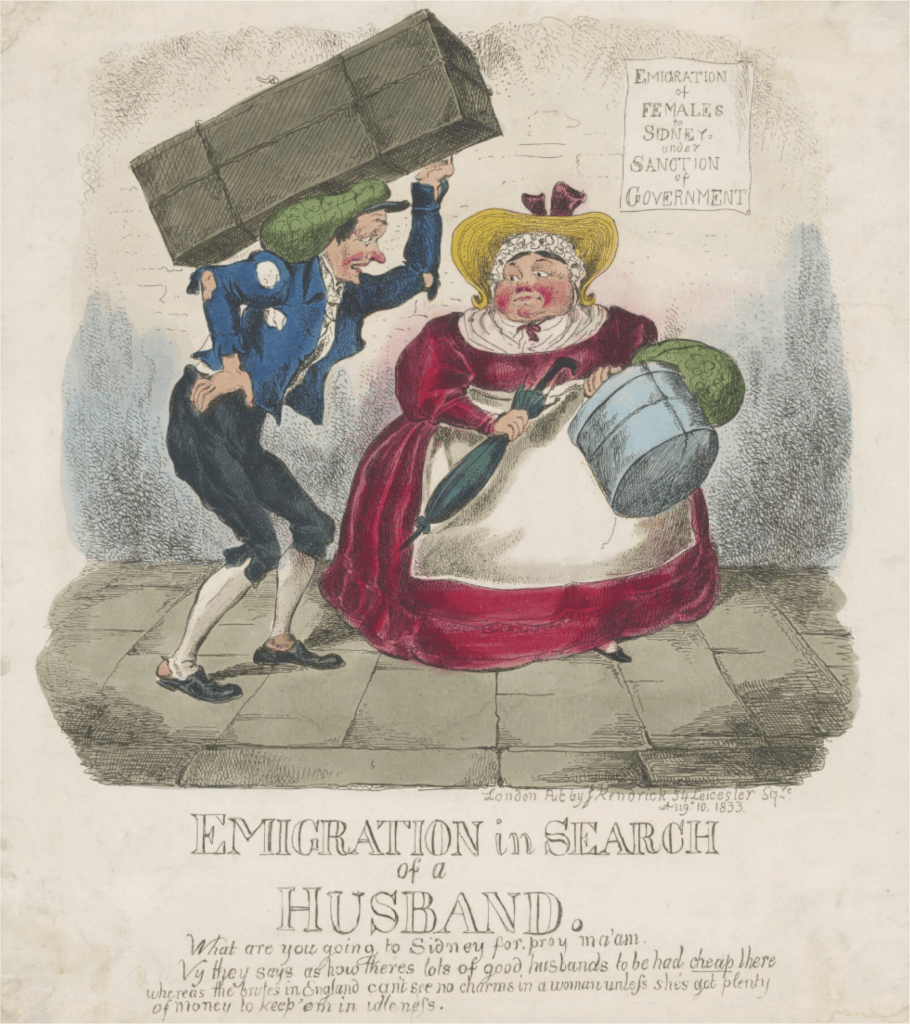
Women in 1837 no matter where in the world they lived really only had one choice. So Mary made the obvious one- Joseph. He was a good kind man, she was now attached to his children. Maybe it was the safe choice- he was known.
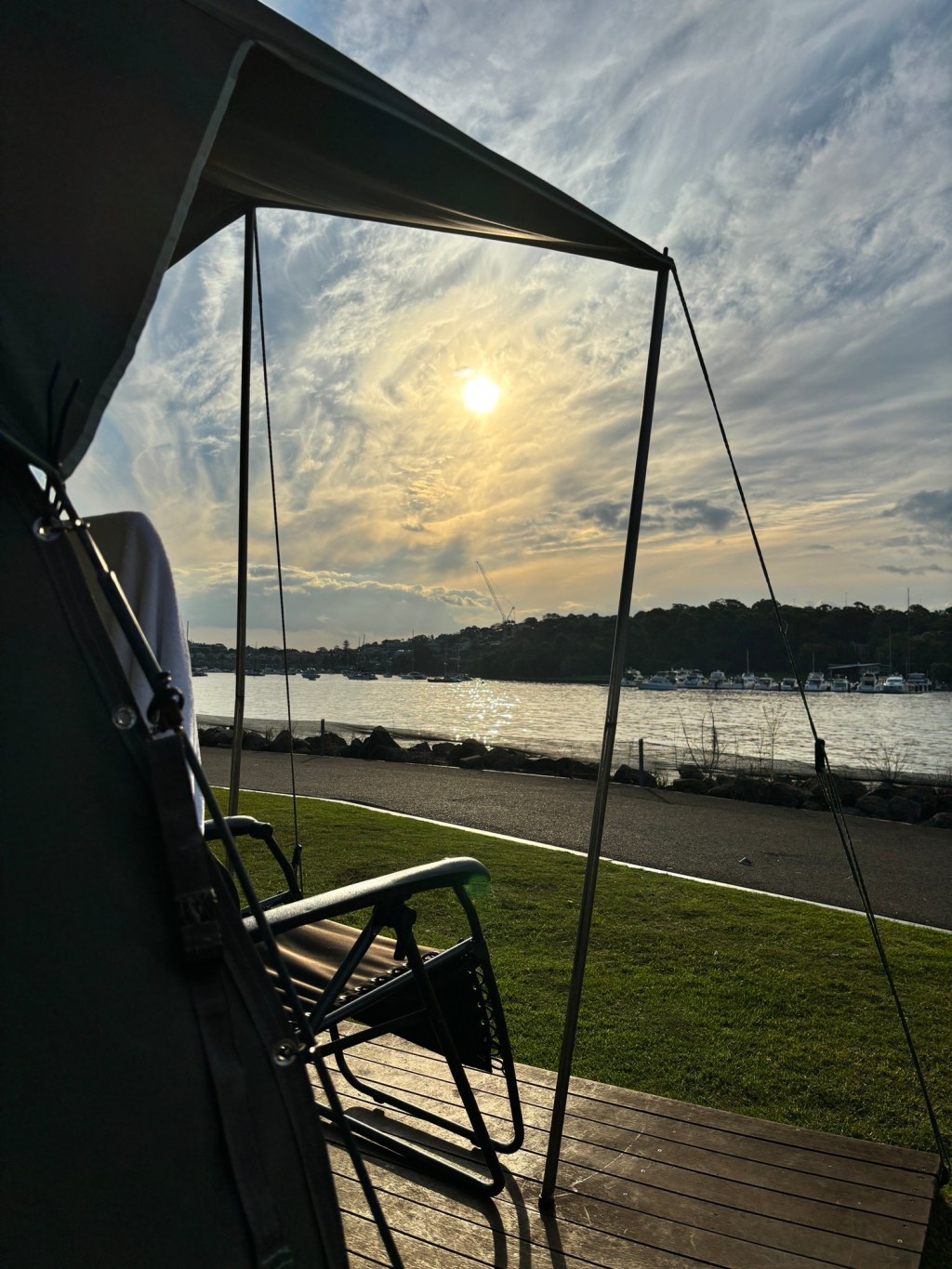
You can walk on “quarantine” beach today, and read the words engraved on the rocks by the imigrants. You can’t see where little Catherine is buried- the graveyard was lost a long time ago but you can look out to the view that Mary saw every day for that month.
She is the reason I exist- if it wasn’t for her and her bravery, the choices she made in unimaginably hard times I wouldn’t be standing on that same beach, I like to think that because of her I can make choices that she couldn’t.
Mary Maloney, I will never take those choices for granted.
Mary was my Great great great grandmother, she went on to have 13 of her own children with Joseph. The Lady McNaughten is the reason that the Sydney quarantine station was built, and is a ghostly reminder that history does not repeat, but often rhymes.



 The Baggage Room
Leave a comment